


A Young Man Disappears
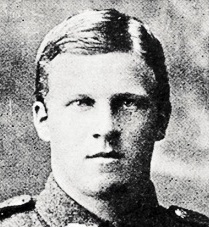
Rupert Sydney Taucher was born in Masterton on 21 September 1895 and lived his early life in Carterton. Moving to Te Kuiti to work, he completed two years’ Territorial service with the 16th Waikato Regiment and when World War One started, Rupert was working as a labourer in the Te Kuiti area.
Rupert Taucher enlisted with the Wellington Infantry Battalion on 18 September 1916 aged 21. After nearly four months training at Featherston & Trentham, 33476 Private Rupert Taucher embarked from Wellington on 21 January 1917 aboard the Ulimaroa bound for Plymouth, England.
Marquette: Nurses from the South, Sailing to the Front
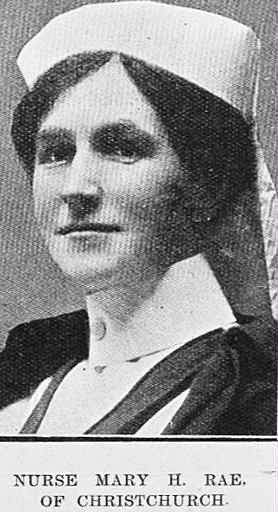
The Stories of Nurses Grigor, Rae, Hildyard, Fox, Gorman, Brown and Clark.
Many of the New Zealand nurses who sailed on the Marquette for Salonika were from small South Island communities. Many had trained together and started their nursing careers in these tight-knit rural southern areas. These were not just nurses thrown together; many were friends and colleagues from before the war. When the Marquette was mortally struck by a torpedo and sinking fast, these nurses found themselves in a fight for their own lives and tending to their own wounds.
Invercargill Nurse Decorated for Duty to the Sick

Alice Clara Searell was born on 18 January 1883.
Alice had completed her training at the Timaru Hospital in 1909 and at the outbreak of World War One, Alice was working as a District Nurse in the Invercargill area.
Alice Searell enlisted in the New Zealand Army Nursing Service Corps (NZANSC) on 8 April 1915. Alice was 32. She embarked from Wellington on the same day aboard the Rotorua bound for Egypt.
Marquette: The Hospital Packed on a Troopship
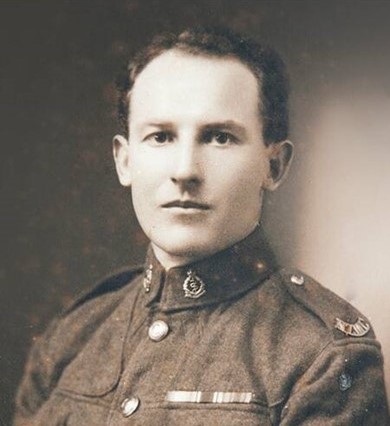
The Stories of Corporals Pettit and Mirfin, Private Nicholson, and Orderly Stone
No. 1 Stationary Hospital was the first New Zealand Expeditionary Force hospital deployed in World War I. Staffed by enthusiastic and selfless personnel adamant at being as close to the action as possible to tend to the wounded, it was bristling with the latest innovations, from electric dynamo driven lights to X-ray units. Sailing aboard the troopship Marquette when it was fatally struck with a torpedo, some of this vital equipment and cargo was lost at sea. Those aboard (including No. 1 Stationary Hospital nurses) now found themselves in a frantic struggle to get through the destruction to safety, and to tend to their own wounds.
Marquette: No Ordinary Troopship

The story of the HMT Marquette and of Privates Victor John Nicholson and John Turnbull Ross.
In the Aegean, on 23 October 1915, the troopship HMT Marquette, carrying over 700 hundred soldiers, including the Ammunition Column of the British 29th Division and the medical staff and equipment of No. 1 Stationary Hospital, as well as over 500 mules and horses, was torpedoed by a German submarine.
The Forgotten War

The Korean War began on 25 June 1950, when the Communist North Korea invaded the South, and New Zealand was one of the first countries to answer the United Nations call with combat assistance.
Following WWII and the Japanese surrender, Korea was divided at the 38th Parallel, and by 1947 effectively become two countries, Communist North Korea and the pro-Western South. The 38th Parallel is the name given to latitude 38° N that in East Asia roughly demarcated North Korea and South Korea. When the United Nations (UN) called for elections to be held throughout the peninsula by 31 March 1948, North Korea first refused to co-operate and then in June 1950, invaded South Korea.
Marquette: Nurses of the Maheno
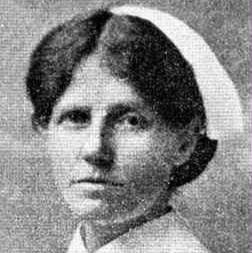
The Stories of Nurses Popplewell, Walker and Rattray.
Among the first group of enthusiastic New Zealand nurses to be deployed in World War I were Edith Popplewell, Mary Walker (who had trained and worked in Australia), and Dunedin identity Lorna Rattray (pictured). They sailed for Egypt on the Hospital Ship No. 1 Maheno in July of 1915.
Motueka Jeweller Dies at the Daisy Patch
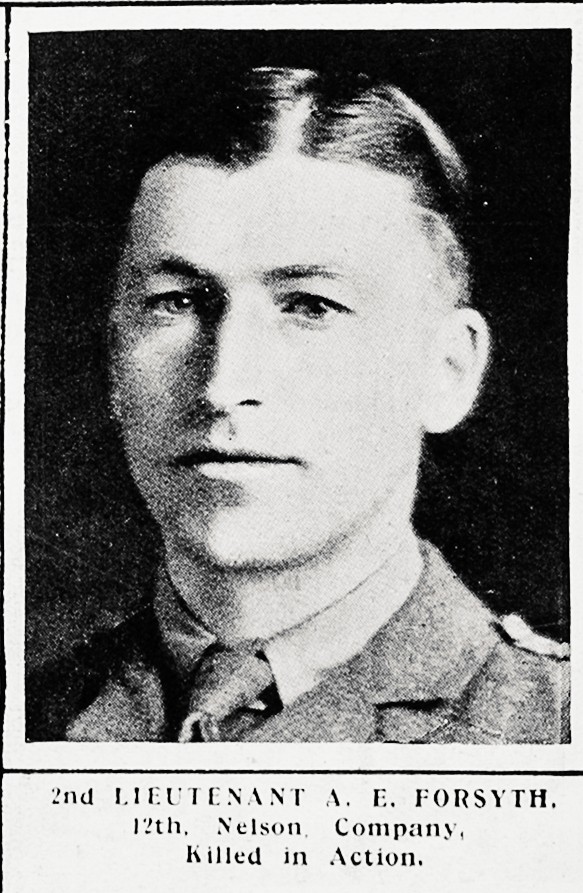
Alexander Elder Forsythe was born in Thurso, Caithnesshire, Scotland on 1 February 1886. Thurso is the northernmost town on the UK mainland.
Alexander Forsythe had previously served for five years with the Royal Highland Volunteers in Perthshire, Scotland before moving to New Zealand to begin a new life. At the outbreak of World War One, Alexander was working as a jeweller and optician in Motueka.
Gallipoli Stories

Of the approximately 3,000 “Kiwis” who landed at Anzac Cove on 25 April, about 20 percent had become casualties by the end of the day, signalling the beginning of a bitter and fierce campaign that would not see the Anzac’s leave until nine months later. The campaign cost the New Zealand Expeditionary Force some 7,500 casualities of whom 2,721 were killed.
Whanganui Teacher Wounded at Messines

Roland Blennerhassett was born in Auroa, Hawera on 3 May 1897. Coming from a large family of two girls and seven boys, six of the Blennerhassett brothers would find themselves enlisting for service before the end of WWI.
Roland enlisted in December 1915 while working as a teacher in Whanganui. He undertook his pre-deployment training at Trentham and Featherston Camp before embarking on 25 July 1916 aboard the Waitemata bound for Devonport, England. After entraining at Sling Camp, Roland arrived in France towards the end of the Battle of the Somme. He received further training at Etaples Camp and was part of the company involved in raiding German lines at Armentières.