


Ceaser the Dog
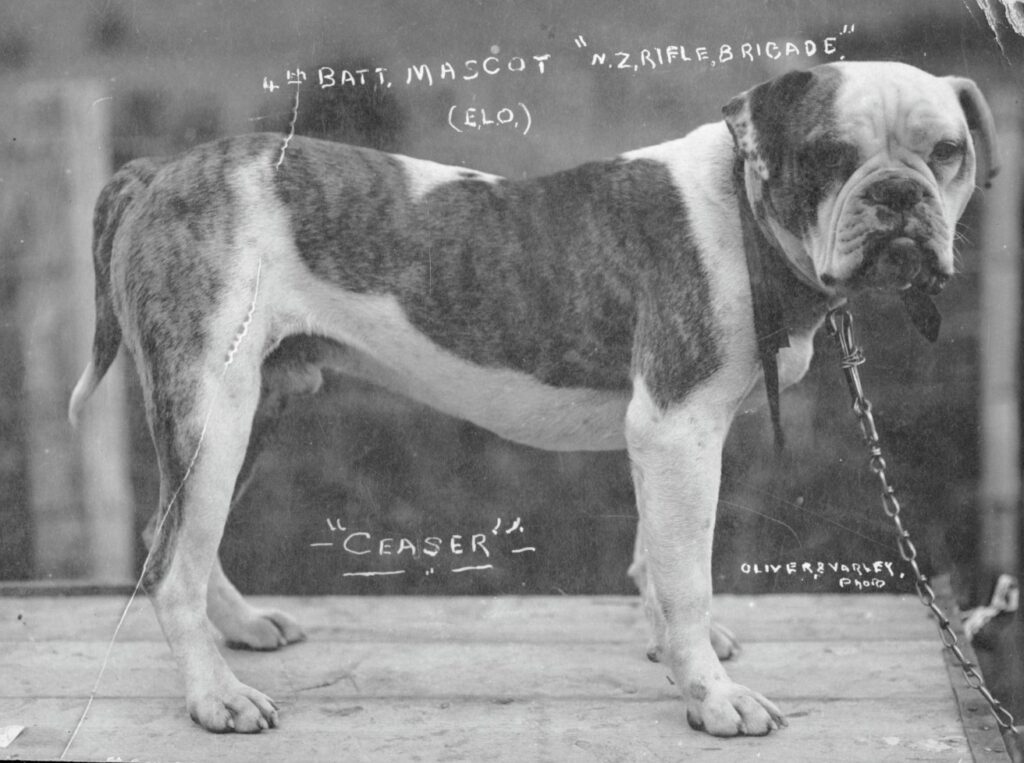
New Zealand’s first war dog on record was Ceaser the bulldog. On 27th May 2021, Ceaser was honoured and remembered at a ceremony at the Museum where he was posthumously awarded the Blue Cross medal for service and bravery during World War I. His medal is now part of the Museum’s collection.
All Black WWI Roll of Honour: 11/448 Sergeant Henry DEWAR
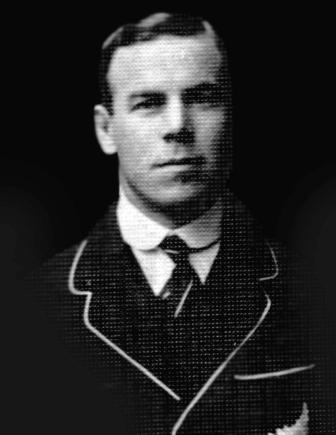
Henry Dewar was born in Foxton in 1883, but spent most of his early years in Wellington before moving to Taranaki at the age of 27. He worked there as an Ironmoulder until World War I broke out four years later in 1914.
Private Patrick Sheerin, Killed in Action
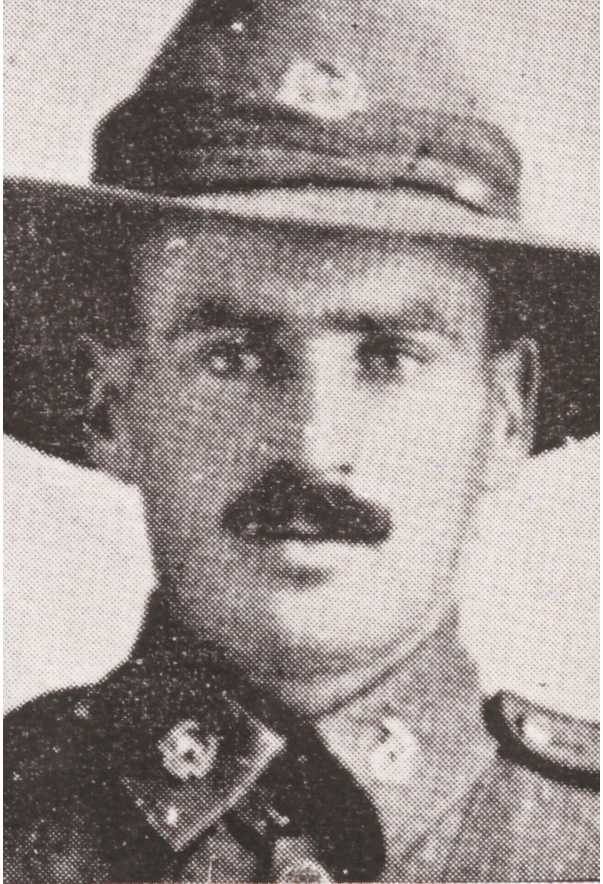
Private Patrick Sheerin, Otago Infantry Battalion
Patrick ‘Pat’ Sheerin was born in Palmerston North in 1891 and at the outbreak of World War One, was working as a Printer for the Wellington based company Ferguson and Mitchell.
Sergeant Dave Gallaher (32513)
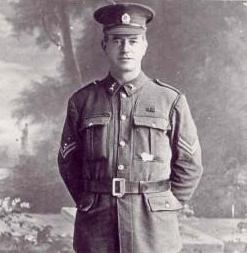
18,000 New Zealanders lost their lives fighting on the Western Front during World War I. One of those who made the ultimate sacrifice, was Sergeant Dave Gallaher captain of the 1905 “Original All Blacks.”
“Dave was a man of sterling worth … girded by great self-determination and self control. He was a valuable friend and could be, I think, a remorseless foe. To us All Blacks his words would often be ‘Give nothing away: take no chances’ …”
Ernest Booth, member of the 1905 “Originals”
The Fox

Sergeant Errol Sampson Allison or Bill as he liked to be known, began World War II serving with the 20th Battalion 2NZEF (New Zealand Expeditionary Force) in both Greece and Crete before being captured by the Germans in North Africa, at Belhamed in December 1941. He ended up in Stalag VIIIA in the German town of Gorlitz where he became known by his fellow prisoners as ‘the Fox’.
A Gallipoli Soldier Remembered
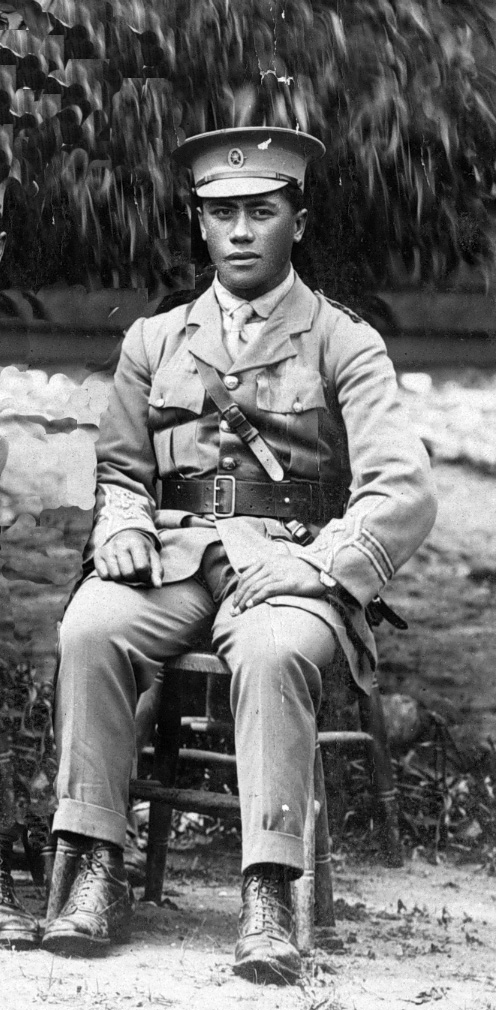
Captain Pirimi Pererika Tahiwi
The 25th of April is a date still deep-rooted in the memory of all New Zealanders. It symbolises the start of the disastrous Gallipoli campaign but also the enduring day in history, known as Anzac Day. It was a campaign with a casualty rate of 7500 Kiwi troops injured, and 2721 killed. Amongst those who were wounded was a school teacher and Maori All Black; Captain Pirimi Tahiwi. His medals are on display in the National Army Museum’s Medal Repository.
Boosting Morale on the Western Front: The Digger Pierrots
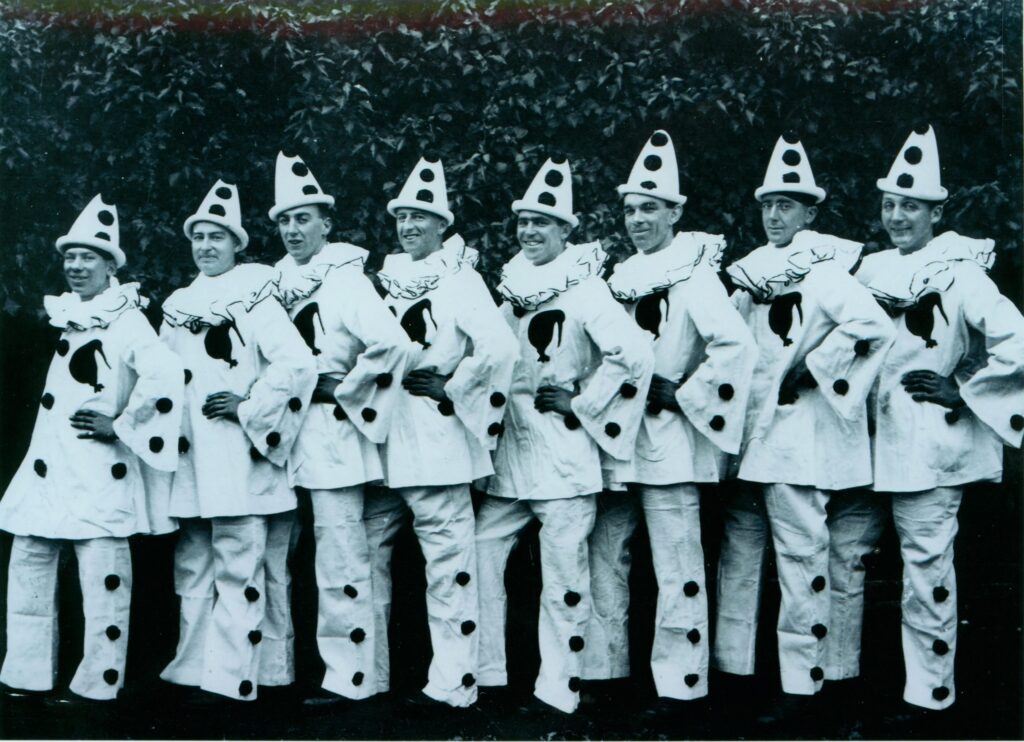
Accounts of World War One understandably revolve around the drama of it’s fierce battles – soldiers emerging above the parapet, the relentless barrage of machine gun fire and thunder of exploding shells. Yet, not all times could be characterized by such intensity. Confrontation was often separated by long periods of stalemate, in which the morale of soldiers began to dwindle as the drudgery of everyday military service took hold. Performance troupes were established across several divisions as a means of providing entertainment and well-needed distraction for soldiers.
The Legend of Arthur Porritt – WWII Veteran and Olympic Medallist

Following up on the Olympic fever that has been sweeping through the country, we’ve rediscovered the story of former New Zealand track star Arthur Porritt, an Olympic bronze medallist who served during World War II.
Floss
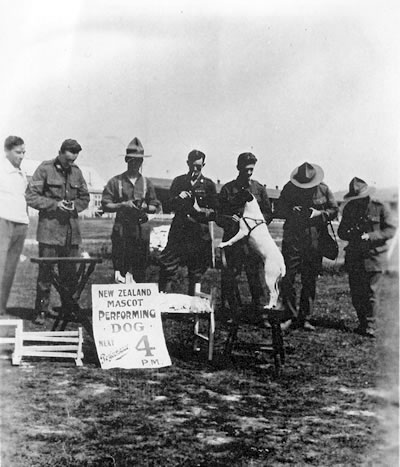
When in England, her (soon-to-be) owner, Driver Percy (Ike) Lowndes, picked up the dog in Towbridge, and taught her to perform some impressive tricks. Floss could skip a jumping rope, play the piano, count to five, sit at a table and order from a waiter, and more importantly, she knew when to take cover during a Zeppelin raid.
A Young Man Disappears
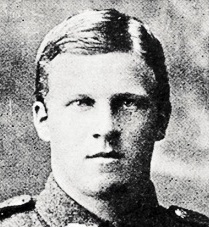
Rupert Sydney Taucher was born in Masterton on 21 September 1895 and lived his early life in Carterton. Moving to Te Kuiti to work, he completed two years’ Territorial service with the 16th Waikato Regiment and when World War One started, Rupert was working as a labourer in the Te Kuiti area.
Rupert Taucher enlisted with the Wellington Infantry Battalion on 18 September 1916 aged 21. After nearly four months training at Featherston & Trentham, 33476 Private Rupert Taucher embarked from Wellington on 21 January 1917 aboard the Ulimaroa bound for Plymouth, England.