

As World War II raged in Europe and North Africa, at home, New Zealand underwent a ‘friendly invasion’ of American troops. Between 1942 and 1944, over 100,000 troops were stationed in New Zealand for varying periods.
Their presence was an outcome of New Zealand’s concern for security in its ‘own backyard’ as a new threat – the Japanese – cut a bloody path through the Pacific. The New Zealand Division were kept in the Mediterranean theatre of war and so the British Prime Minister Winston Churchill successfully lobbied President Roosevelt to send an American force to New Zealand to assure New Zealanders that they would be protected should the Japanese land on their shores.
In June 1942, the Americans arrived in strength with infantry and the famous US Marines landing in both Auckland and Wellington. Initially, the units stayed for a short period before heading to the battles in the Pacific. As the war progressed, the American divisions stayed longer.
American troops in New Zealand formed three main groups. First there were those and by far the majority, who were in the country for operational reasons (training for combat). These men were in camps in Auckland, Wellington and the Wairarapa. The second large group were those sick and wounded men evacuated to New Zealand for medical treatment at one of the 19 hospitals which were built, the largest two being at Cornwall Park in Auckland and Silverstream in Wellington, and the third group comprised the steady stream of Americans – soldiers, sailors and airmen – who came to New Zealand for rest and recreation.
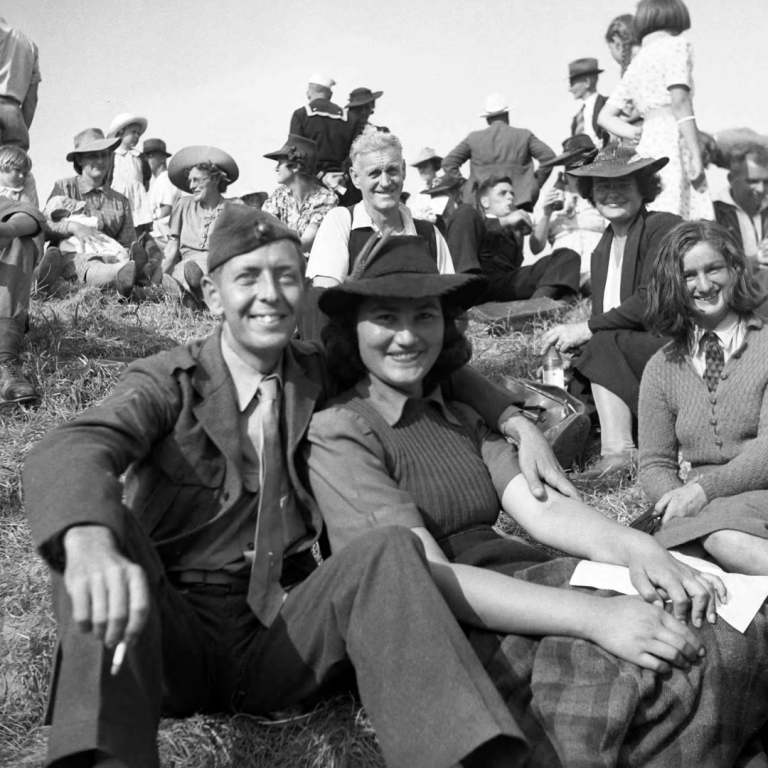
These men made a huge impact on New Zealand society during the two years they were stationed in New Zealand. At its peak, in July 1943, there were 48,200 servicemen in the country with additional American sailors and merchant seamen making fleeting visits aboard warships and merchant vessels. The Americans provided both relief and curiosity for New Zealanders and their customs and behaviour, their ‘strange’ accents and excellent manners, and their free-spending habits all made them stand out from their staid New Zealand counterparts.
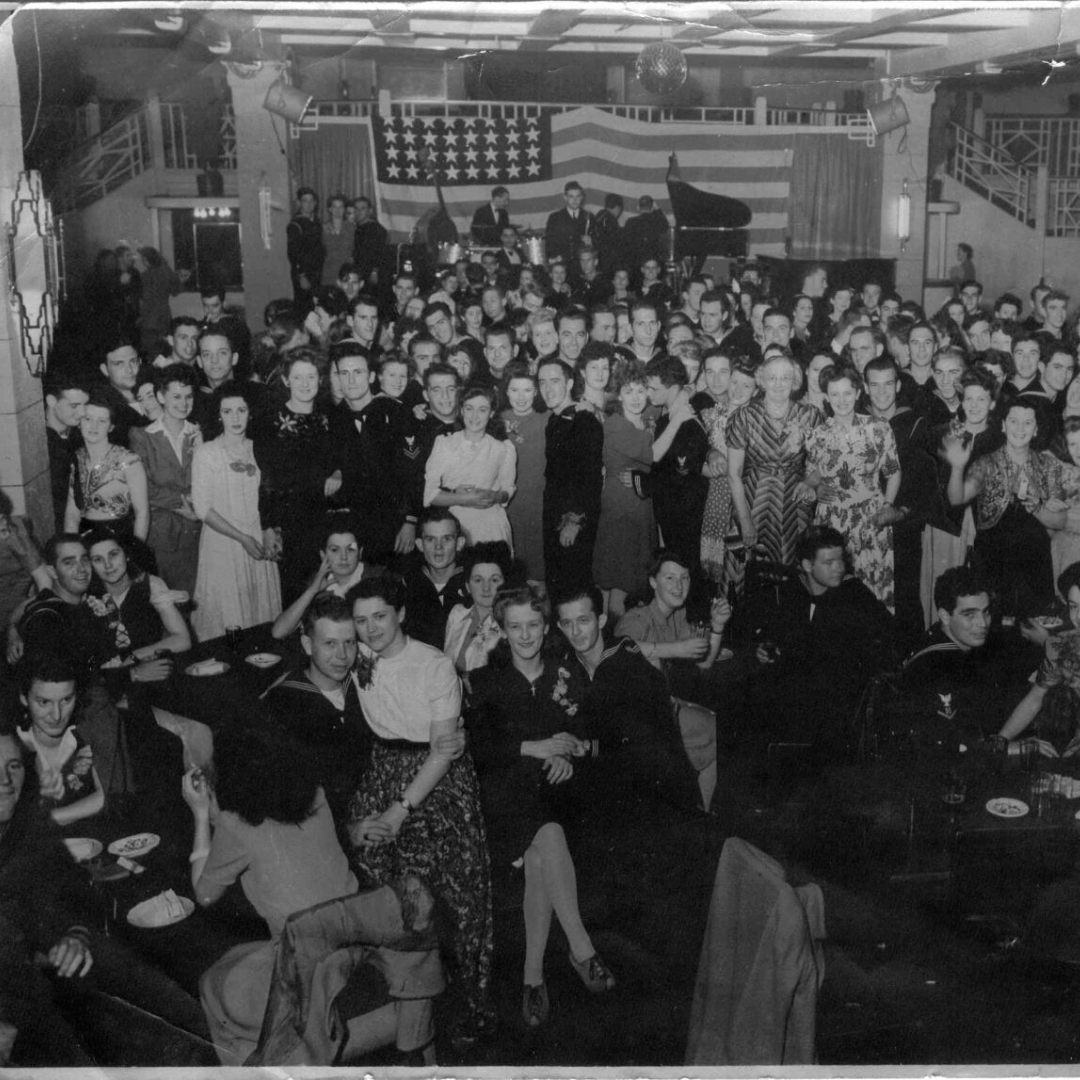
Coffee houses and milk bars sprung up – taxi drivers, florists, jewellers and hotel owners experienced a boom. A lively nightlife developed in Auckland and Wellington and ‘Kiwi’ women were swept off their feet to the tunes of the American ‘big band’ music.
During the two years, 1396 New Zealand women married Americans in New Zealand and went to the US as war brides. However for many other women, relationships were only fleeting, with many ending in heartbreak or worse, unwanted pregnancies.
There was, at times, friction between American troops and New Zealand men with the odd brawl breaking out on a Saturday night but overall, the Americans were welcomed in New Zealand and as the last service personnel departed in October 1944, many would remember the young men, many of whom died on the beaches in the Pacific, with a particular fondness.
Images:
Above: ATL F 352 1/4: US troops and kiwi women.
Below from left: ATL F 32258 1/4: American troops arriving by train, 1992.2635: US Marines at Majestic Cabaret in Wellington. National Army Museum Te Mata Toa.