


During the next two years of fighting, Grant showed a strong will and the ability to lead from the front. As a result, he rose to the rank of Sergeant.
Towards the end of August 1918, the focus of the British and Commonwealth’s forces was on the town of Bapaume. Following a massive Allied artillery barrage the New Zealanders began to advance towards Bancourt, where they came up against a ‘stern’ German rearguard action designed to delay the pursuit.
Grant’s VC
On 1 September 1918, the objective was Bancourt Ridge. Just after 5.00am, the Wellington Regiment attacked. Grant was in command of one of the platoons of the Taranaki Company and, as they neared the crest of the ridge, a line of five enemy machine guns held them up. Under point-blank fire, Grant and his men rushed forward. Some 30 metres away from the guns, Grant and Lance Corporal CT Hill dashed ahead of the platoon and leapt into the machine gun post at the centre of the German defences, quickly destroying it. Grant then eliminated the surrounding remaining guns in a similar manner. For this action, Hill was awarded the Distinguished Conduct Medal and Grant was awarded the Victoria Cross. His citation reads:
“For most conspicuous bravery and devotion to duty near Bancourt on the 1st September, 1918, when Serjeant in command of a platoon forming part of the leading waves of the battalion attacking the high ground to the east of Bancourt. On reaching the crest, it was found that a line of five enemy machine-gun posts offered a serious obstacle to further advance. Under point blank fire, however, the company advanced against these posts. When about twenty yards from the posts Sjt. Grant, closely followed by a comrade, rushed forward ahead of his platoon, and with great dash and bravery entered the centre post, demoralising the garrison and enabling the men of his platoon to mop up the position. In the same manner he then rushed the post on the left and the remaining posts were quickly occupied and cleared by his company. Throughout the whole operation on this and the two previous days Sgt. Grant displayed coolness, determination, and valour of the highest order, and set a splendid example to all.”
After WWI
Grant was commissioned in early 1919 and returned to New Zealand. He left the Army in 1920, but later joined the Territorial Force, finally retiring in 1929 with the rank of Lieutenant. In civilian life, like many others during the Depression years, Grant fell on hard times, but when he could he continued to work as a builder, He later owned a small business and took a keen interest in horse racing.
‘Jack’ Grant died in Auckland in 1970, aged 81. He is buried at the Waikumete Cemetery in Auckland.
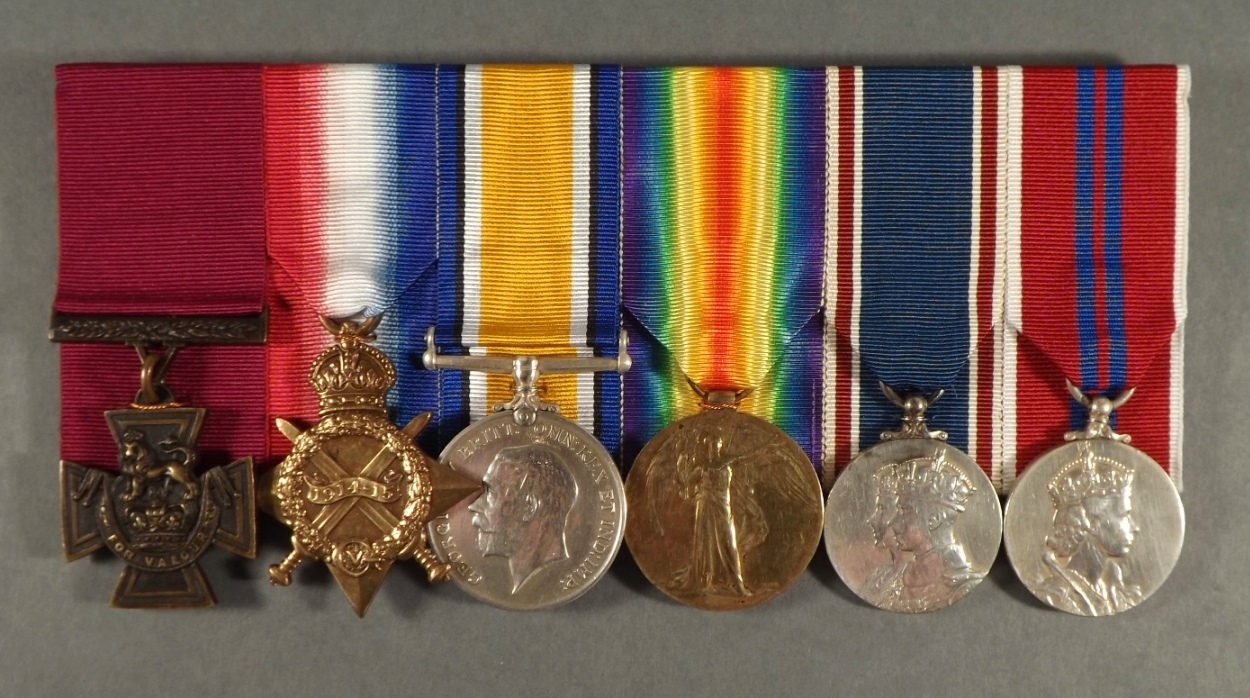
We are very proud to have John Grant’s medals on display at the National Army Museum Te Mata Toa. If you wish to see them, they are in the Valour Alcove in our Medal Repository.
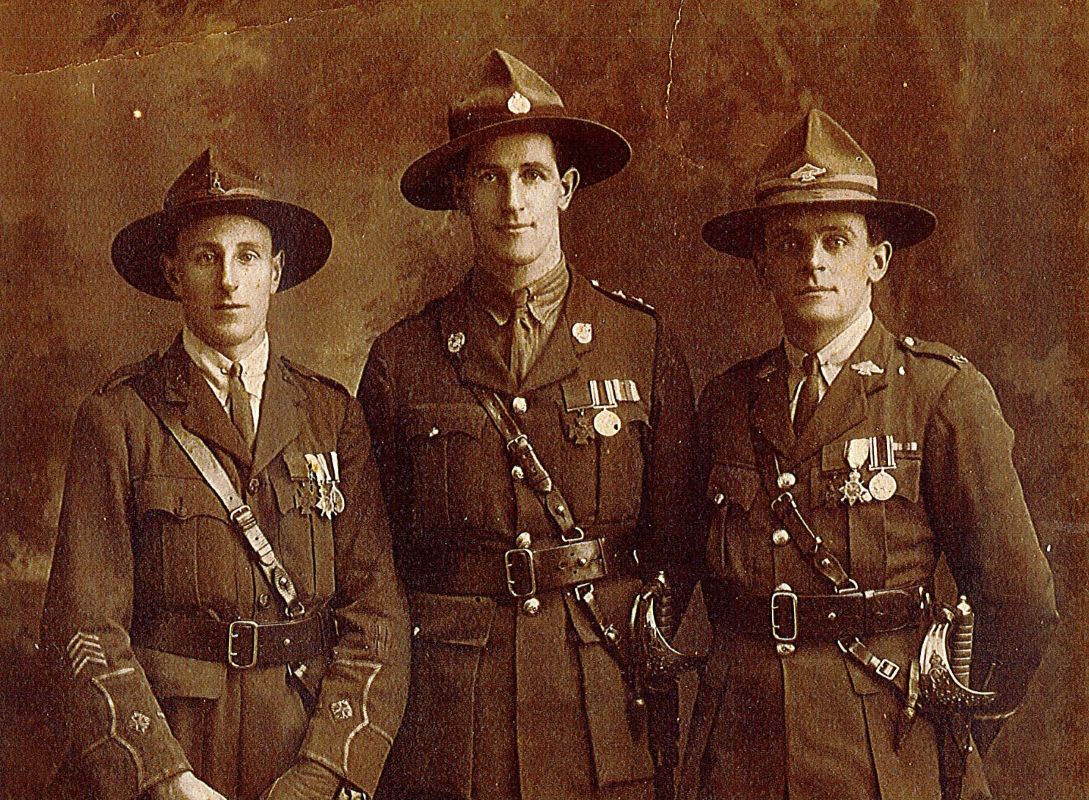
Pictured below: Grant medal group and archival image of Laurent, Andrew, and Grant VC recipients