This beautifully crafted Mah Jong set is a remarkable example of the artistry and craftsmanship produced by prisoners of war during the Second World War.



This beautifully crafted Mah Jong set is a remarkable example of the artistry and craftsmanship produced by prisoners of war during the Second World War.
It was carved by a Japanese prisoner of war held at Featherston Camp and presented as a gift to one of the camp guards. The National Army Museum’s collection includes several similar sets, each reflecting the exceptional skill, patience, and creativity of the men who made them.
Prisoners assigned to camp duties, such as clearing gorse, were often granted free afternoons. Many used this time to pursue hobbies including carving, woodworking, and other crafts, resulting in finely detailed objects like this Mah Jong set.
Originally established as a military training camp during the First World War, Featherston Camp was converted into a prisoner of war camp in 1942, housing around 800 Japanese prisoners.
This artefact also serves as a reminder of the tragic Featherston Camp Incident on 25 February 1943. A protest by prisoners refusing to work escalated into a violent confrontation, resulting in the deaths of 48 prisoners and one New Zealand guard. Today, a memorial garden and plaque near the former camp commemorate those who lost their lives during the incident.
See also the History of Featherston POW Camp.
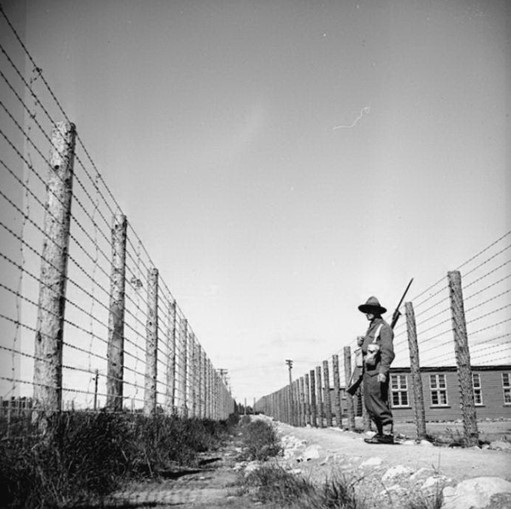
Pic bottom right: A solider on guard at the Featherston POW Camp, 1943. Source: Alexander Turnbull Library, Wellington. Ref: 1/4-000791-F.
It was carved by a Japanese prisoner of war held at Featherston Camp and presented as a gift to one of the camp guards. The National Army Museum’s collection includes several similar sets, each reflecting the exceptional skill, patience, and creativity of the men who made them.
Prisoners assigned to camp duties, such as clearing gorse, were often granted free afternoons. Many used this time to pursue hobbies including carving, woodworking, and other crafts, resulting in finely detailed objects like this Mah Jong set.
Originally established as a military training camp during the First World War, Featherston Camp was converted into a prisoner of war camp in 1942, housing around 800 Japanese prisoners.
This artefact also serves as a reminder of the tragic Featherston Camp Incident on 25 February 1943. A protest by prisoners refusing to work escalated into a violent confrontation, resulting in the deaths of 48 prisoners and one New Zealand guard. Today, a memorial garden and plaque near the former camp commemorate those who lost their lives during the incident. See also the History of Featherston POW Camp. Pic bottom right: A solider on guard at the Featherston POW Camp, 1943. Source: Alexander Turnbull Library, Wellington. Ref: 1/4-000791-F.



From museum visits to research support, our team is ready to assist you on your journey through New Zealand’s military history.